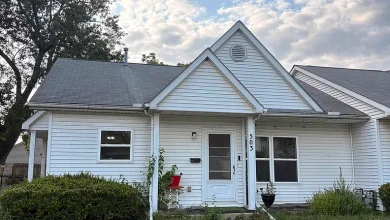
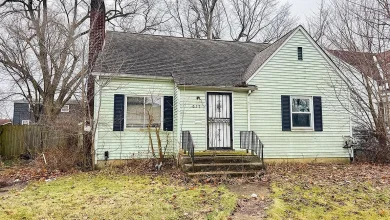
$13,250 Detroit Fixer-Upper: 3-Bedroom Home With Renovation Potential at 6422 Ellsworth St
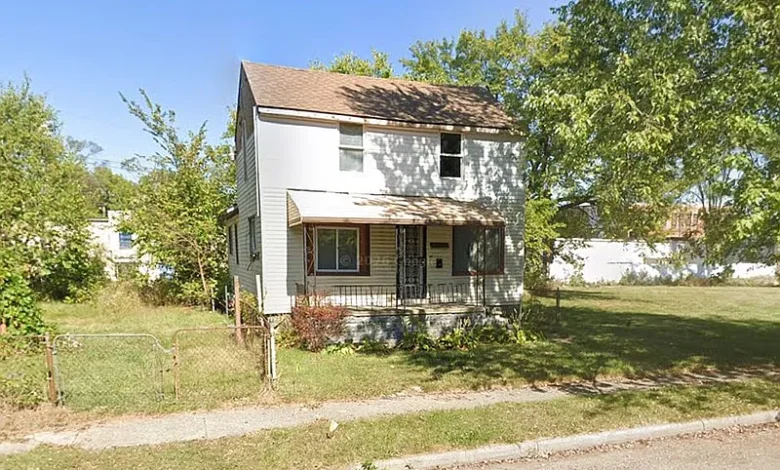
$13,250 Detroit Fixer-Upper: 3-Bedroom Home With Renovation Potential at 6422 Ellsworth St
For buyers searching for an affordable fixer-upper, renovation project, or potential real estate investment in Detroit, the property at 6422 Ellsworth St, Detroit, MI 48238 immediately stands out because of its remarkably low asking price. Listed at just $13,250, this single-family residence offers three bedrooms, one full bathroom, approximately 1,311 square feet of interior living space, hardwood flooring, a basement, and a residential lot of approximately 3,005 square feet.
Built in 1920, the house is more than a century old and is being marketed primarily as a renovation opportunity rather than a move-in-ready residence. The seller describes the property as a potential “hidden diamond,” emphasizing the opportunity for an investor or renovation-minded buyer to improve the home and potentially add value.
At approximately $10 per square foot based on the current listing price, this property is likely to attract considerable attention from buyers searching the lower end of Detroit’s real estate market. In fact, the supplied Zillow listing data shows thousands of views and hundreds of saves, suggesting that many online shoppers have already noticed the property.
However, a low purchase price is only the beginning of the financial calculation when considering a fixer-upper. Renovation expenses, inspections, taxes, insurance, utilities, title research, financing, permits, contractor costs, and unexpected repairs can dramatically change the total amount required to restore an older home.
Here is a detailed look at this Detroit property, its features, renovation considerations, and the factors prospective buyers may want to investigate before making an offer.
Property Overview
The property at 6422 Ellsworth St is a single-family home located in Detroit, Michigan.
According to the listing information, the primary property details include:
Asking price: $13,250
Address: 6422 Ellsworth St, Detroit, MI 48238
Property type: Single-family residence
Bedrooms: 3
Bathrooms: 1 full bathroom
Interior living area: Approximately 1,311 square feet
Lot size: Approximately 3,005 square feet
Year built: 1920
Price per square foot: Approximately $10
Basement: Yes, listed as partially finished
Flooring: Hardwood
Roof: Asphalt
Parking: One space, with garage referenced in the listing data
View: City
Tax assessed value: $15,800
HOA: None listed
Date on market: September 19, 2026
The property is being offered for sale by owner, rather than through a conventional listing agreement with Zillow or its affiliates.
Why a $13,250 Detroit Home Gets Attention
In a real estate market where home prices can easily reach hundreds of thousands of dollars, a house listed for $13,250 naturally attracts curiosity.
For approximately the cost of some used vehicles, this listing includes a detached single-family residence with three bedrooms, more than 1,300 square feet of living space, hardwood flooring, and a basement.
The low price, however, should not automatically be interpreted as an indication of extraordinary value.
The seller clearly positions the home as a renovation project.
That distinction matters because a property requiring substantial rehabilitation can involve expenses that greatly exceed the original acquisition price.
Experienced investors often evaluate inexpensive houses based not simply on what they cost to buy, but on their total project cost.
That figure can include acquisition expenses, repairs, permits, insurance, taxes, utilities, financing, contractor labor, materials, cleanup, security, and a contingency reserve for unexpected problems.
A 1920 Detroit Home With More Than a Century of History
The house was constructed in 1920, placing it among Detroit’s substantial inventory of early-20th-century residential properties.
Older homes can offer architectural character and building materials that distinguish them from modern construction.
At the same time, age makes comprehensive inspection especially important.
Over more than 100 years, a property may have experienced numerous owners, renovations, repairs, weather events, changes to electrical and plumbing systems, and periods of varying maintenance.
Prospective buyers should therefore avoid making assumptions based only on the visible portions of the home.
The condition behind walls, beneath floors, inside the basement, and around the foundation can have a significant impact on the cost of renovation.
Approximately 1,311 Square Feet of Living Space
The residence contains approximately 1,311 square feet of interior living area.
For a three-bedroom property, that amount of space could provide a practical layout without creating the renovation scale associated with much larger homes.
From an investor’s perspective, square footage matters because almost every renovation category is influenced by property size.
More square footage generally means more flooring, drywall, paint, electrical fixtures, heating capacity, and other materials.
At roughly 1,300 square feet, the house may represent a more manageable rehabilitation project than a 3,000- or 4,000-square-foot property, although actual renovation difficulty depends on condition rather than size alone.
Three Bedrooms
The home contains three bedrooms, a common configuration for single-family housing.
A three-bedroom layout can provide flexibility for future occupants.
The rooms could function as traditional bedrooms, while one could potentially serve as an office, guest room, hobby room, or other multipurpose space depending on household needs.
For investors considering future resale or rental use, bedroom count is also an important factor when comparing the property with other homes in the surrounding market.
However, investors should evaluate comparable properties carefully.
A three-bedroom configuration does not guarantee any particular resale price or rental income. Condition, location, lot characteristics, renovation quality, nearby sales, and broader market conditions all matter.
One Full Bathroom
The property currently has one full bathroom.
For a three-bedroom home, one bathroom is a straightforward traditional configuration, especially for a residence built in the early 20th century.
Bathroom renovation can become one of the more expensive parts of a rehabilitation because it may involve plumbing, electrical work, fixtures, flooring, waterproofing, ventilation, drywall, and finish materials.
Before estimating renovation expenses, buyers should inspect the existing plumbing and determine whether fixtures can remain in their current locations.
Moving plumbing can increase project complexity and cost.
Hardwood Flooring
One of the interior features identified in the listing is hardwood flooring.
Hardwood can be a desirable feature in an older home, particularly if original flooring remains structurally sound.
Depending on its condition, hardwood may potentially be cleaned, repaired, sanded, and refinished rather than completely replaced.
That possibility should be evaluated room by room.
Water damage, missing boards, severe staining, structural movement, previous modifications, and excessive wear can affect whether restoration is practical.
When original hardwood can be preserved, it may help maintain some of the home’s historic character while reducing the need for entirely new flooring materials.
Full Basement and Partially Finished Space
The seller specifically highlights a full basement, while the detailed property information describes the basement as partially finished.
Basement space can be useful for storage, utilities, laundry, workshops, or other purposes depending on its condition.
However, basements in century-old homes deserve careful attention during an inspection.
Potential concerns can include moisture intrusion, drainage problems, foundation movement, cracks, deteriorated masonry, plumbing leaks, mold, inadequate ventilation, or outdated mechanical systems.
A basement may look relatively straightforward during dry weather but behave differently during periods of heavy rain.
Buyers should therefore investigate signs of previous water intrusion and consider how exterior grading and drainage affect the foundation.
Basement Renovation Considerations
A partially finished basement should not automatically be counted as legal living space.
If a future owner wants to convert basement areas into bedrooms, recreation rooms, offices, or other finished spaces, local requirements may apply.
These can involve ceiling height, emergency exits, windows, electrical systems, insulation, fire safety, moisture control, and permits.
For investment calculations, it is generally safer to value the property based on confirmed legal living area rather than assuming unfinished or partially finished areas can easily be converted.
A Compact Residential Lot
The home sits on approximately 3,005 square feet of land.
The seller’s description also references a lot size of approximately 3,049 square feet, creating a small discrepancy in the supplied information. Prospective buyers should rely on official records or a professional survey when exact dimensions matter.
A compact urban lot can be easier to maintain than a large suburban or rural parcel.
Less land can mean less mowing, landscaping, fencing, snow management, and general exterior maintenance.
For buyers primarily interested in the house rather than acreage, this type of lot may be perfectly adequate.
Potential Additional Lot Next Door
One of the most interesting statements in the seller’s description is that the opportunity may include an additional lot next to the property.
This could potentially be significant, but the word “may” is important.
Prospective buyers should not assume that an adjacent parcel is automatically included in the $13,250 asking price.
Instead, they should obtain clear documentation identifying exactly which parcel or parcels are included in the transaction.
If an additional lot is available, buyers should verify its parcel number, ownership, taxes, liens, zoning, dimensions, title status, and whether it is included in the same purchase agreement or requires a separate transaction.
Why an Adjacent Lot Could Matter
If a neighboring lot were included or separately available, it could potentially provide additional yard space.
The seller specifically suggests that a larger yard could appeal to a family with children.
Additional land could also potentially create space for gardening, recreation, landscaping, or other permitted outdoor uses.
However, buyers should not assume that a vacant adjacent lot can automatically be developed.
Zoning rules, minimum lot dimensions, setbacks, utility access, parcel configuration, and local building requirements can influence what can legally be constructed.
The value of an additional parcel therefore depends on its legal status and the buyer’s intended use.
Garage and Parking
The detailed listing information references one parking space and includes a garage among the parking features.
Parking is an important practical consideration for urban residential properties.
A garage can potentially provide vehicle protection, storage, or workspace, but its actual condition should be evaluated independently.
Older detached or attached garage structures may require roof, foundation, door, siding, framing, or electrical repairs.
Buyers should confirm exactly what parking structures exist and whether they are usable in their current condition.
Asphalt Roof
The home is listed with an asphalt roof.
Roof condition is one of the most important considerations when purchasing a fixer-upper.
Water intrusion from a failing roof can affect ceilings, walls, insulation, framing, electrical systems, and interior finishes.
Before purchasing, buyers may want to determine the roof’s approximate age and condition.
A professional inspection can help identify missing or damaged shingles, flashing issues, sagging areas, ventilation concerns, and evidence of previous leaks.
If replacement is necessary, the cost should be included in the renovation budget before an investor evaluates the overall economics of the project.
Heating Information Requires Investigation
The heating information is described simply as “Other, Other”, which provides limited useful detail.
This is an area where prospective buyers should seek additional information.
Heating systems can represent a substantial expense, particularly in Michigan, where winter temperatures make reliable heating essential.
Buyers should determine what heating equipment currently exists, whether it is operational, what fuel source it uses, and whether repairs or replacement will be required.
An inexpensive home requiring a complete heating system replacement can become substantially more expensive than the asking price suggests.
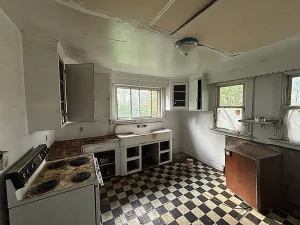
Range and Oven Included
The property information states that a range/oven is included.
For a major renovation project, an existing appliance may be a relatively small financial consideration, but it still helps clarify what is being sold with the property.
Buyers should verify appliance condition during an inspection and should not assume that listed equipment is operational unless confirmed.
If the kitchen requires substantial renovation, appliances may eventually need to be replaced regardless.
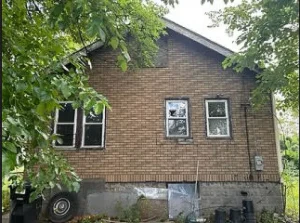
Exterior Materials
The listing references shingle and vinyl exterior features.
Vinyl siding is common because it can require less routine painting than traditional wood siding.
However, buyers should inspect both the visible siding and the building materials underneath.
Damaged siding, missing sections, improper installation, or hidden moisture can affect renovation costs.
Exterior inspection should also include gutters, downspouts, windows, doors, trim, foundation areas, porches or steps, and drainage around the building.
City View and Urban Setting
The listing identifies a city view, reflecting the home’s urban Detroit location.
For buyers considering this property, the surrounding neighborhood is just as important as the physical structure.
Real estate value can vary significantly from one Detroit neighborhood or even one block to another.
Investors should research nearby sales, property conditions, occupancy levels, local amenities, transportation, schools where relevant, and planned developments.
A renovation strategy that works in one part of Detroit may not produce the same financial outcome in another.
No HOA Listed
There is no HOA fee listed for the property.
The absence of a homeowners association can reduce recurring ownership expenses and eliminate association-specific restrictions.
However, city regulations, zoning rules, building codes, property maintenance ordinances, permit requirements, and other local rules still apply.
Anyone planning extensive renovation should investigate the permits required for the intended work.
Tax Assessed Value of $15,800
The property has a reported tax assessed value of $15,800.
That figure is relatively close to, but still above, the $13,250 asking price.
Tax assessments and market values are not the same thing, so buyers should avoid using the assessed value as a guaranteed indication of what the property is worth.
Actual market value depends on property condition, location, comparable sales, demand, title status, and other factors.
Property taxes should also be independently verified before closing.
For Sale by Owner
This property is being offered for sale by owner, commonly abbreviated as FSBO.
According to the supplied listing information, Zillow is displaying the property at the owner’s request, and the home is not subject to a listing agreement with Zillow or its affiliates.
For buyers, an FSBO transaction can operate differently from a conventional transaction involving a listing agent.
Regardless of whether agents are involved, buyers should ensure that contracts, disclosures, title work, inspections, and closing procedures are handled appropriately.
Professional legal or real estate guidance may be useful, particularly for an inexpensive property requiring significant rehabilitation.
Why Investors May Notice This Property
The seller specifically describes the house as an opportunity for investors seeking a renovation project with upside potential.
The obvious attraction is the low acquisition price.
At $13,250, the initial purchase cost is dramatically below the price of many move-in-ready homes.
But successful real estate investing depends on much more than purchasing cheaply.
An investor must understand how much money will be required to bring the property to the desired condition and what the home might realistically be worth afterward.
That calculation is often referred to as evaluating the property’s potential after-repair value, or ARV.
Understanding After-Repair Value
After-repair value is an estimate of what a property might sell for after a planned renovation is completed.
It should not be based on guesswork.
Investors commonly study recently sold comparable homes with similar location, size, bedroom count, bathroom count, lot characteristics, and renovation quality.
A fully renovated house several miles away in a stronger neighborhood may not be a useful comparison.
Likewise, an asking price is not necessarily the same as a completed sale price.
Accurate comparable sales are critical when deciding how much renovation spending a project can support.
The Renovation Budget Is Critical
Imagine purchasing a house for $13,250 and discovering that it requires major work across multiple systems.
Possible renovation categories could include roofing, electrical wiring, plumbing, heating, windows, kitchen, bathroom, flooring, drywall, paint, siding, foundation repairs, landscaping, appliances, and garage work.
Even individually manageable projects can add up quickly.
Labor expenses can also represent a substantial portion of the renovation budget.
An experienced contractor who can perform some work personally may approach the project differently from an investor who must hire professionals for every task.
Don’t Forget Holding Costs
Renovation expenses are not the only costs investors should consider.
A property costs money while it is being repaired.
Potential holding expenses can include property taxes, insurance, utilities, lawn maintenance, snow removal, security, financing costs, permits, and other ongoing expenses.
If a renovation expected to take three months instead takes nine months, holding costs can increase considerably.
Project delays can occur because of contractor schedules, inspections, material availability, permit issues, weather, or unexpected repairs.
Insurance for a Fixer-Upper
Insurance deserves particular attention when purchasing a vacant or heavily renovated property.
A standard homeowners insurance policy may not always be appropriate for a building that is vacant or undergoing extensive construction.
Buyers should speak with insurance professionals before closing to determine what coverage is available and how much it will cost.
Waiting until after purchasing the property to investigate insurance can create unnecessary complications.
Financing Can Be More Difficult
Very inexpensive fixer-uppers may not qualify for the same financing products as move-in-ready homes.
Lenders often evaluate both the borrower and the condition of the collateral.
A property requiring major repairs may not satisfy certain mortgage standards.
Additionally, the small loan amount itself can sometimes affect financing availability because some lenders may be less interested in originating extremely small mortgages.
Buyers should investigate financing before making commitments if they are not planning a cash purchase.
Could This Become a Rental Property?
A three-bedroom home may attract interest from investors considering a future rental strategy.
However, potential rent should be based on current comparable rentals in the immediate area rather than broad Detroit averages.
Before renting the property, an owner would also need to ensure that it meets applicable safety, occupancy, registration, inspection, and housing requirements.
Rental calculations should account for more than gross monthly rent.
Operating expenses can include property taxes, insurance, maintenance, repairs, vacancy, management, utilities paid by the owner, capital improvements, and turnover expenses.
What About Renovating and Reselling?
Another potential strategy is renovation followed by resale.
This approach is sometimes called flipping, but profitability is never guaranteed.
A successful resale project requires disciplined purchasing, accurate renovation estimates, careful project management, appropriate renovation choices, and realistic expectations about the final sale price.
Transaction costs also matter.
Selling a renovated home can involve closing expenses, real estate commissions where applicable, taxes, staging, landscaping, cleaning, and other costs.
The gap between a $13,250 purchase price and a future resale price may appear enormous, but what matters is the amount remaining after every expense is considered.
Extensive Due Diligence Is Important
Before purchasing a century-old Detroit fixer-upper, prospective buyers should consider a comprehensive property evaluation.
Important areas can include the foundation, structure, roof, electrical system, plumbing, heating, windows, basement, drainage, sewer connection, exterior materials, garage, and interior finishes.
Because the house dates to 1920, buyers may also wish to investigate environmental and building-material concerns commonly associated with older housing.
Qualified professionals can help identify issues that are difficult to recognize during a casual walkthrough.
Verify the Title and Outstanding Obligations
Low-priced properties deserve the same title research as expensive homes.
Buyers should confirm ownership and investigate liens, unpaid taxes, assessments, municipal obligations, or other title matters that could affect the transaction.
The adjacent lot mentioned by the seller should also be researched separately if it forms part of the buyer’s decision.
A professional title company or attorney can help ensure that buyers understand what they are acquiring.
Strong Online Attention
This property has generated substantial online interest.
According to the supplied Zillow information, the listing accumulated approximately 2,364 views and 216 saves in 16 days.
That level of attention is understandable given the $13,250 price.
Extremely inexpensive houses often generate significant curiosity online because the headline price stands out dramatically from typical home values.
However, online engagement does not establish market value.
Some viewers may be serious investors, while others may simply be curious about what a house at this price looks like.
Why Low-Cost Detroit Homes Attract Investors
Detroit has long attracted investors searching for inexpensive residential properties.
The city contains a large inventory of older housing, and purchase prices in certain areas can be dramatically lower than those in many major U.S. metropolitan markets.
But inexpensive acquisition does not mean easy profit.
Older housing requires careful property selection, and neighborhood-level differences can be substantial.
Experienced investors tend to focus on the complete financial picture rather than simply searching for the cheapest available house.
That includes renovation costs, local demand, comparable sales, rental economics, taxes, insurance, property management, vacancy, and long-term maintenance.
Who Might Consider 6422 Ellsworth St?
This property is most likely to appeal to buyers comfortable with renovation risk.
An experienced investor may see a low-cost acquisition with potential to create value through rehabilitation.
A contractor may find the project more manageable if they can perform part of the work themselves.
A buyer seeking an affordable future residence might also investigate the property if they have sufficient resources to complete necessary improvements.
However, someone who needs a move-in-ready home may find that a heavily discounted renovation property is not the right fit.
The asking price should never distract from the importance of understanding the home’s actual condition.
Final Thoughts on This $13,250 Detroit Fixer-Upper
At $13,250, the property at 6422 Ellsworth St, Detroit, MI 48238 is an attention-grabbing example of how inexpensive residential real estate can still appear in certain markets.
The home offers approximately 1,311 square feet of living space, three bedrooms, one full bathroom, hardwood flooring, a basement, a garage referenced in the property details, and a residential lot of approximately 3,005 square feet.
Built in 1920, it also comes with the challenges associated with evaluating and renovating a century-old structure.
The seller is openly marketing the property as a renovation opportunity with potential upside rather than presenting it as a turnkey home.
That distinction is crucial.
A $13,250 acquisition price may look exceptionally low, but the final economics depend on what professional inspections reveal and how much money must be invested before the property can reach the buyer’s desired condition.
Roofing, foundation work, electrical upgrades, plumbing, heating, kitchen and bathroom renovations, windows, flooring, exterior repairs, permits, insurance, taxes, and labor could all influence the project’s total cost.
The possibility of an additional neighboring lot adds another interesting element, but buyers should confirm in writing exactly what land is included in the transaction.
For investors, the appropriate approach is to compare the complete acquisition and rehabilitation cost with realistic neighborhood sales or rental data. For owner-occupants, the focus should include safety, habitability, financing, renovation timelines, and the amount of work required before moving in.
The unusually strong online attention—more than 2,300 views and over 200 saves according to the supplied listing information—shows how much interest a low-priced Detroit property can generate.
Whether this house ultimately represents a worthwhile project depends not on the headline price alone, but on condition, renovation costs, title status, neighborhood market conditions, and the future owner’s strategy.
For a buyer willing to conduct thorough due diligence and take on a substantial rehabilitation project, 6422 Ellsworth St offers something increasingly difficult to find in American real estate: a three-bedroom single-family house with an asking price of just over $13,000.
Listed on Zillow.