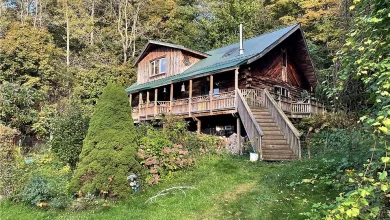
$12,500 Fixer-Upper House for Sale in Quaker City, Ohio – 2 Bedrooms, 1 Bathroom, and a Corner Lot With Investment Potential
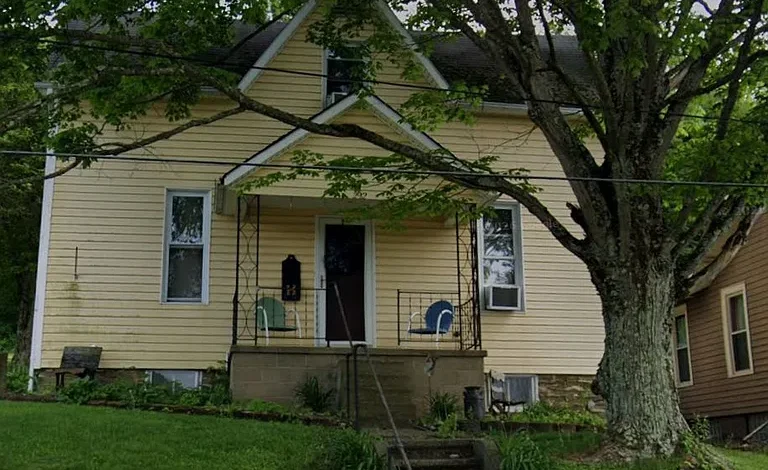
$12,500 Fixer-Upper House for Sale in Quaker City, Ohio – 2 Bedrooms, 1 Bathroom, and a Corner Lot With Investment Potential
Discover an Affordable $12,500 Home in Quaker City, Ohio
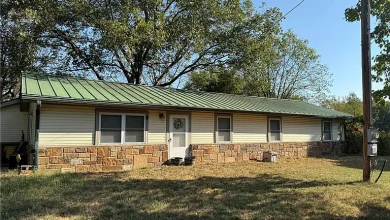
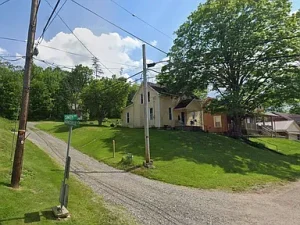
Finding a single-family home for sale at just $12,500 is an opportunity that may catch the attention of real estate investors, renovation enthusiasts, and buyers searching for affordable housing in Ohio. Located at 292 Smith Ave, Quaker City, OH 43773, this historic property offers 1,020 square feet of living space, two bedrooms, one bathroom, and a 3,920-square-foot corner lot.
Originally built in 1880, this home has stood for more than a century and presents an opportunity for someone willing to undertake a complete renovation. The property is being offered directly by its owner, making it particularly interesting for buyers who want to learn more about its condition, renovation requirements, and potential future uses.
With an advertised asking price of $12,500, the home is listed at approximately $12 per square foot. While this figure may seem remarkably affordable compared with many conventional residential properties, prospective buyers should understand that the home requires a complete remodel.
For investors and experienced contractors, a property like this may offer the opportunity to restore an older residence and explore potential resale or rental value. For buyers interested in creating an affordable personal residence, it could provide a starting point for a carefully planned renovation project.
However, purchasing an inexpensive fixer-upper requires more than comparing asking prices. Buyers must consider structural integrity, repair expenses, financing availability, property taxes, insurance, and local housing market conditions.
The combination of a historic structure, a corner lot, hardwood and concrete flooring, a partially finished basement, and central cooling makes this property worth examining.
This comprehensive guide explores the home’s features, renovation possibilities, investment considerations, and important financial questions that buyers should investigate before making an offer.
Property Overview – 292 Smith Ave, Quaker City, OH 43773
The property is listed as a single-family residence located in Quaker City, Ohio.
According to the owner-provided information, the home requires a complete remodel but offers potential for buyers prepared to undertake a substantial renovation.
| Property Feature | Details |
|---|---|
| Asking Price | $12,500 |
| Property Address | 292 Smith Ave, Quaker City, OH 43773 |
| Property Type | Single-Family Residence |
| Bedrooms | 2 |
| Bathrooms | 1 Full Bathroom |
| Living Area | 1,020 Sq. Ft. |
| Lot Size | 3,920 Sq. Ft. |
| Year Built | 1880 |
| Construction | Frame |
| Roof Material | Asphalt |
| Flooring | Concrete and Hardwood |
| Basement | Partially Finished |
| Cooling | Central |
| Heating | Other / Unspecified |
| Lot Feature | Corner Lot |
| Price Per Square Foot | Approximately $12 |
| Annual Property Taxes | $735 Reported |
| Tax-Assessed Value | $46,490 Reported |
| Listing Type | For Sale by Owner |
| Date on Market | September 29, 2026 |
The property provides a relatively modest interior layout, making it suitable for buyers who prefer smaller homes or investors interested in renovating compact residential properties.
However, its age and the owner’s statement that a complete remodel is needed indicate that substantial improvements may be required before occupancy.
Why This $12,500 Ohio House May Interest Real Estate Investors
Low-priced properties often attract investors because the initial acquisition cost can be considerably lower than that of renovated homes.
At $12,500, this property may appeal to buyers who specialize in distressed real estate, rehabilitation projects, or affordable housing investments.
One potential advantage is the relatively small interior area.
At 1,020 square feet, the house may require fewer materials for certain improvements than a much larger residence.
However, major repairs involving foundations, roofs, electrical systems, or plumbing can still be expensive regardless of square footage.
The property’s corner-lot location is another feature worth considering.
Corner lots can offer different access arrangements and landscaping possibilities compared with interior parcels.
The home also has an existing residential structure, which may provide a basis for restoration if its condition and local regulations permit.
Investors should avoid assuming that the low asking price automatically represents a bargain.
The total investment will depend on the purchase price, closing expenses, renovation costs, holding costs, and eventual resale or rental value.
A professional inspection and a realistic renovation budget are essential.
A Historic Home Built in 1880
One of the most interesting characteristics of 292 Smith Ave is its construction date.
Built in 1880, the property reflects an earlier period of residential development in Ohio.
Older homes can offer architectural character and building features that distinguish them from contemporary construction.
However, historic age also creates important renovation considerations.
A home built more than 140 years ago may have experienced multiple generations of repairs, modifications, and changes in building systems.
The current condition of the foundation, framing, roof, windows, electrical wiring, plumbing, and insulation should be carefully examined.
Buyers should not assume that original components remain intact or that previous renovations were completed according to current standards.
A qualified home inspector can help identify visible deficiencies.
Additional specialists may be necessary to evaluate structural concerns, outdated electrical systems, or significant moisture problems.
Restoring an older house can be rewarding, but it requires careful planning and an understanding of potential hidden expenses.
Two Bedrooms and One Bathroom – A Practical Residential Layout
The property contains two bedrooms and one full bathroom.
This configuration may appeal to smaller households, couples, individuals, or buyers who want a separate room for guests or a home office.
With 1,020 square feet of reported living space, the home may offer opportunities for an efficient interior arrangement.
However, the supplied listing does not include a detailed floor plan.
Prospective buyers should verify room dimensions, circulation, ceiling heights, and the condition of existing interior walls.
A renovation might focus on improving the functionality of the kitchen, living room, bedrooms, and bathroom.
Depending on the current layout, buyers may consider updating interior finishes while preserving useful existing features.
The final renovation plan should be based on structural conditions and applicable building requirements.
Moving walls or altering plumbing locations can significantly increase project expenses.
For a budget-conscious renovation, maintaining the existing layout may sometimes be more economical than making major structural changes.
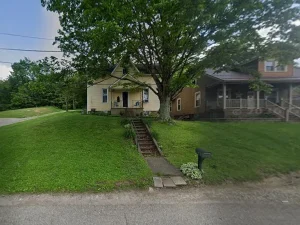
The Corner Lot – An Attractive Property Feature
The home sits on a 3,920-square-foot corner lot, equivalent to approximately 0.09 acres.
Corner properties can offer certain advantages depending on the surrounding streets, access points, and parcel configuration.
For example, a corner location may provide additional street exposure or flexibility in landscaping.
Some buyers appreciate corner lots because they can have fewer immediately adjoining properties along certain boundaries.
However, corner parcels may also have additional sidewalk maintenance responsibilities, street-facing setbacks, or restrictions affecting fences and landscaping.
Buyers should verify the exact property boundaries and local zoning requirements.
The lot’s relatively compact size may appeal to owners who prefer manageable outdoor maintenance.
Potential improvements could include lawn restoration, planting areas, pathways, or outdoor seating, subject to local regulations.
The actual usability of the land should be confirmed through a property inspection and available survey information.
Complete Remodel Required – What Buyers Should Expect
The owner explicitly states that the home needs a complete remodel.
This is one of the most important details in the listing.
A complete remodel may involve extensive repairs to interior finishes, kitchens, bathrooms, and mechanical systems.
However, the listing does not specify exactly which components are damaged or require replacement.
Buyers should therefore avoid assuming the work is limited to cosmetic improvements.
A comprehensive inspection should evaluate the roof, foundation, framing, electrical system, plumbing, heating, cooling, and water-related issues.
The condition of the partially finished basement should also be examined.
If the home has been vacant or poorly maintained, additional problems may be present.
A realistic renovation budget should include a contingency allowance for unexpected expenses.
For investors, accurate cost estimation is particularly important because repair overruns can eliminate potential profit.
Roof Inspection and Exterior Renovation
The listing identifies an asphalt roof.
Asphalt roofing is common in residential construction, but the listing does not provide the roof’s age or condition.
Buyers should inspect the roofing materials, flashing, gutters, drainage, and any signs of water intrusion.
A damaged roof can lead to problems with insulation, ceilings, walls, and structural framing.
Exterior siding and trim should also be evaluated.
Because the home uses frame construction, moisture protection is especially important.
Potential improvements may include repairing damaged siding, repainting exterior surfaces, replacing deteriorated trim, and improving drainage around the foundation.
However, buyers should prioritize necessary repairs over decorative changes.
An attractive exterior does not compensate for unresolved structural or water-related problems.
Hardwood and Concrete Flooring – Restoration Possibilities
The property listing identifies hardwood and concrete flooring.
Hardwood floors can be an appealing feature in older residential properties.
Depending on their condition, existing hardwood surfaces may be suitable for refinishing rather than complete replacement.
Restoration can sometimes preserve original materials and reduce waste.
However, flooring should be inspected for water damage, structural movement, rot, and uneven surfaces.
Concrete flooring may be present in certain areas, but the listing does not identify its exact location.
Buyers should determine whether the concrete is part of the finished living area, basement, or another space.
Potential flooring improvements may include refinishing hardwood, repairing damaged subfloors, or installing durable replacement materials.
The appropriate solution depends on the existing conditions and intended use of each room.
Partially Finished Basement – Additional Space and Important Risks
The home includes a partially finished basement.
Basement space can provide storage, access to mechanical systems, or additional functional areas.
However, the listing does not specify the basement’s dimensions, condition, or permitted uses.
Older basements may experience moisture intrusion, foundation cracks, inadequate drainage, or ventilation problems.
Before planning improvements, buyers should evaluate the basement for signs of water damage and structural deterioration.
A qualified inspector may recommend further assessment by a foundation specialist or waterproofing contractor.
Buyers should also determine whether any finished basement areas meet applicable building requirements.
A partially finished basement should not automatically be treated as legally habitable space.
Any plan to create additional bedrooms or living areas would require appropriate review of ceiling heights, emergency exits, heating, ventilation, and local building codes.
Central Cooling and Heating Considerations
The listing identifies central cooling and describes the heating system only as “Other.”
This information should be verified before purchase.
The presence of central cooling does not establish that the system is currently functional or efficient.
A licensed HVAC technician should inspect the cooling equipment, ductwork, electrical connections, and controls.
The heating system requires particular attention because Ohio experiences cold winter temperatures.
Buyers should determine the type, age, condition, and capacity of the existing heating equipment.
If a replacement system is necessary, the expense should be included in the renovation budget.
Insulation and air sealing may also influence future heating and cooling costs.
A properly designed system can improve comfort and help manage energy consumption.
Estimated Renovation Costs for This Ohio Fixer-Upper
Renovation expenses vary widely depending on the condition of the home, local contractor rates, material costs, and the scope of work.
The following figures are hypothetical planning allowances rather than actual estimates for 292 Smith Ave.
| Renovation Category | Illustrative Cost Range |
|---|---|
| Roof Repairs or Replacement | $4,000–$10,000 |
| Electrical System Improvements | $3,000–$10,000 |
| Plumbing Repairs or Replacement | $3,000–$10,000 |
| Kitchen Renovation | $5,000–$15,000 |
| Bathroom Renovation | $3,000–$10,000 |
| Flooring Improvements | $2,000–$7,000 |
| Heating and Cooling Work | $4,000–$12,000 |
| Interior Painting and Finishes | $2,000–$6,000 |
These amounts are illustrative and may overlap. They do not include every potential expense.
Major foundation repairs, structural reconstruction, environmental remediation, permits, and unexpected damage could increase costs substantially.
For example, a buyer purchasing the property for $12,500 and spending $35,000 on renovations would have a combined purchase and renovation expense of $47,500 before closing costs and other ownership expenses.
If renovation costs reached $60,000, the combined amount would increase to $72,500.
These examples demonstrate why buyers should obtain written contractor estimates before making financial commitments.
Is This House a Good Fix-and-Flip Opportunity?
A fix-and-flip investment involves purchasing a property, renovating it, and attempting to sell it for a profit.
This strategy can be attractive when a property has a low acquisition price and a realistic path to increased market value.
However, the success of a flip depends on more than the purchase price.
Investors should research recent sales of renovated two-bedroom homes in Quaker City and nearby comparable communities.
The most relevant comparable properties should have similar square footage, lot characteristics, condition, and location.
An after-repair value estimate should be based on actual market evidence.
Investors must also account for transaction expenses, renovation costs, property taxes, insurance, utilities, and selling commissions.
The time required to complete the project can influence profitability.
Unexpected delays may increase holding costs and reduce potential returns.
A successful flip requires disciplined budgeting and a realistic understanding of local buyer demand.
Could This Property Become a Long-Term Rental?
Another possible investment strategy is renovating the home for long-term rental use.
A two-bedroom property may appeal to tenants who want a smaller detached residence rather than an apartment.
However, rental demand and achievable rent in Quaker City should be researched carefully.
Investors should compare available rental properties and recent leasing activity.
They should also investigate any local registration, inspection, or occupancy requirements.
Rental income must be sufficient to cover operating expenses and provide an acceptable return on the total investment.
Expenses may include property taxes, insurance, repairs, maintenance, vacancies, management, and owner-paid utilities.
Because the home requires a complete remodel, it should not be assumed that rental income could begin immediately after purchase.
The cost and time required to make the property safe and habitable are important parts of the investment analysis.
Understanding Rental Cash Flow
Cash flow is an important consideration for investors purchasing residential rental properties.
Gross rental income represents the rent collected before expenses.
Net operating income accounts for ordinary operating expenses but excludes mortgage payments, income taxes, depreciation, and certain capital expenditures.
For illustration, consider a hypothetical scenario in which a renovated home rents for $850 per month.
That would produce $10,200 in annual scheduled rental income before vacancies and expenses.
If annual vacancy losses were $510 and ordinary operating expenses totaled $3,500, illustrative net operating income would be $6,190.
These figures are examples only and are not estimates of achievable rent or expenses for this property.
Investors should replace hypothetical assumptions with verified local market information.
They should also account for major future repairs and any financing obligations.
A low purchase price does not guarantee positive cash flow.
The Reported $735 Annual Property Tax Amount
The listing reports annual property taxes of $735.
This is an important figure for buyers evaluating long-term ownership expenses.
Based on the reported amount, the equivalent monthly tax cost would be approximately $61.25.
However, future tax obligations may change depending on assessments, ownership transfers, exemptions, and applicable Ohio property tax rules.
The listing also reports a tax-assessed value of $46,490.
This figure should not be confused with a current market appraisal.
Buyers should obtain updated property tax records from the appropriate county offices.
They should also investigate whether outstanding taxes, penalties, or special assessments affect the property.
Property taxes are only one part of the total ownership budget.
Insurance, utilities, maintenance, and repairs should also be considered.
Buying Directly From the Property Owner
This property is advertised as for sale by owner.
The listing identifies the owner as the seller rather than a traditional real estate brokerage.
For-sale-by-owner transactions can involve direct communication between buyers and sellers.
However, purchasing directly from an owner does not eliminate the need for professional due diligence.
Buyers should verify ownership, title status, property boundaries, disclosures, and any outstanding liens.
A qualified real estate attorney or title company can help coordinate important transaction requirements.
The buyer should also obtain a written purchase agreement clearly identifying the price, contingencies, closing date, and responsibilities of each party.
Professional inspections remain important.
A direct sale may simplify some communication, but it does not automatically reduce risk or guarantee a lower final purchase cost.
Financing Options for a $12,500 Fixer-Upper
Financing a very inexpensive property can be more complicated than obtaining a conventional mortgage for a move-in-ready home.
Some lenders have minimum loan amounts or property condition requirements.
A house needing a complete remodel may not qualify for traditional financing in its current condition.
Buyers may investigate renovation loan programs, specialized lenders, or other financing arrangements.
However, eligibility depends on borrower qualifications, property condition, program rules, and lender requirements.
Cash purchases may be more practical for some investors, but buyers should preserve sufficient funds for renovations and unexpected expenses.
Financing decisions should account for the entire project rather than only the initial $12,500 asking price.
Living in Quaker City, Ohio
Quaker City is a small community in Guernsey County in eastern Ohio.
The surrounding region offers a more rural setting than Ohio’s largest metropolitan areas.
For buyers interested in small-town living, communities like Quaker City may provide a different residential experience from densely populated urban neighborhoods.
However, buyers should carefully evaluate access to everyday services.
Important considerations include grocery shopping, healthcare, schools where relevant, employment opportunities, and transportation.
Internet service availability should also be verified for buyers who work remotely.
The exact property location may influence commuting convenience and access to local amenities.
Prospective buyers should visit the neighborhood and research current local market conditions before purchasing.
Comparing Renovation With Buying a Move-In-Ready Home
A low-priced fixer-upper can appear financially attractive, but buyers should compare the total project cost with the price of alternative properties.
For example, purchasing this home for $12,500 and spending $50,000 on renovations would result in $62,500 in combined acquisition and improvement expenses.
That amount excludes closing costs, taxes, insurance, and unexpected repairs.
A move-in-ready home priced near the same total amount might offer greater convenience and less renovation uncertainty.
However, a fixer-upper may allow buyers to customize finishes and make improvements according to their preferences.
The appropriate choice depends on budget, renovation experience, available time, and personal goals.
Buyers should consider both financial costs and the effort required to manage a construction project.
Important Safety and Environmental Considerations
Because the home was built in 1880, buyers should consider potential environmental and building safety issues.
Older residential properties may contain lead-based paint, outdated wiring, or materials requiring special handling during renovation.
The presence of specific hazards has not been confirmed for this home.
However, appropriate testing and professional assessment may be advisable before beginning demolition or major repairs.
Lead-safe renovation requirements can apply to certain work on pre-1978 housing.
Buyers should also inspect for moisture problems, damaged structural materials, and unsafe mechanical systems.
A complete remodel should prioritize safety and code compliance before cosmetic improvements.
Insurance for an Older Home Requiring Renovation
Insurance is another important consideration.
Homes requiring extensive repairs may be more difficult or expensive to insure than properties in good condition.
Some insurers may require repairs before issuing standard homeowners coverage.
If the property will remain vacant during renovations, specialized insurance may be necessary.
Buyers should discuss the building’s condition and planned improvements with insurance professionals.
Potential coverage needs may include property protection, liability insurance, and renovation-related policies.
Obtaining insurance quotations before closing can help prevent unexpected ownership expenses.
Questions to Ask Before Purchasing 292 Smith Ave
Before making an offer, prospective buyers should investigate the following issues:
-
What specific repairs are required for the complete remodel?
-
Is the foundation structurally sound?
-
What is the age and condition of the asphalt roof?
-
Are the electrical and plumbing systems functional?
-
Does the central cooling system operate properly?
-
What type of heating system is installed?
-
Has the partially finished basement experienced water intrusion?
-
Are there outstanding property taxes, liens, or code violations?
-
Are permits required for the planned renovations?
-
What is the realistic market value of the home after repairs?
These questions can help buyers evaluate whether the property fits their financial resources and renovation experience.
Who Might Be Interested in This Affordable Ohio Home?
This property may appeal to several types of buyers.
Experienced investors may be interested in researching its resale or rental potential.
Contractors and skilled renovation enthusiasts may see opportunities to restore the older structure.
Buyers seeking a small personal residence may appreciate the two-bedroom layout and manageable lot size.
The corner location may also appeal to buyers interested in landscaping or outdoor improvements.
However, the property may be unsuitable for anyone who requires immediate occupancy or lacks funds for substantial repairs.
A complete remodel can involve considerable uncertainty.
Prospective buyers should evaluate the property based on verified condition and total costs rather than the advertised price alone.
Final Thoughts – Is This $12,500 Quaker City Fixer-Upper Worth Considering?
Located at 292 Smith Ave in Quaker City, Ohio, this historic single-family home offers an opportunity to investigate affordable real estate ownership.
With two bedrooms, one bathroom, 1,020 square feet of living space, and a 3,920-square-foot corner lot, the property has features that may interest investors and renovation-focused buyers.
Its construction date of 1880 adds historical character, while the listed hardwood flooring, partially finished basement, and central cooling provide additional points for inspection.
The $12,500 asking price is likely to attract attention from buyers searching for inexpensive houses in Ohio.
However, the owner’s statement that the property needs a complete remodel should remain central to any purchasing decision.
The final cost of restoring the home could substantially exceed its initial purchase price.
Buyers should obtain professional inspections, verify property taxes and title information, research local comparable sales, and develop a realistic renovation budget.
For someone with sufficient experience, available capital, and a carefully planned strategy, this property may represent a renovation project worth investigating.
For buyers seeking a ready-to-occupy home, the required work may present significant challenges.
Ultimately, the value of this opportunity depends on the building’s actual condition, the cost of necessary repairs, and the property’s potential after renovation.
Listing Information and Owner Contact
Property Address: 292 Smith Ave, Quaker City, OH 43773
Advertised Asking Price: $12,500
Property Type: Single-Family Residence
Bedrooms: 2
Bathrooms: 1
Living Area: 1,020 Square Feet
Lot Size: 3,920 Square Feet
Year Built: 1880
Annual Property Taxes: $735 Reported
Listing Type: For Sale by Owner
Owner Contact: (614) 407-6561
Date Listed: September 29, 2026
Property details are based on the supplied owner listing. Price, availability, property condition, tax obligations, financing eligibility, and other information should be independently verified before making a purchase. Renovation budgets and investment examples are illustrative and do not guarantee profitability or future property value.
Listed on Zillow